
Today, modern businesses rely on data to guide their product development, revenue strategies, marketing performance, and operational strategy. Tools such as Looker have assisted teams in exploring and visualizing data, however, business intelligence has evolved. While traditional dashboards powered early adoption of Looker analytics, modern teams demand faster responses, easier processes, and less reliance on analysts.
Thus, in addition to the traditional looker competitors, new ways of analytics are also being explored by the organisation, which will enable the non-technical teams to directly interact with data.
For instance, conversational analytics platforms like AskEnola allow business users to ask complex questions in natural English, enabling the organisation to receive structured insights instantly. This is a larger shift towards faster analytics that is easily accessible to support real-time decision-making.
Why Modern Teams Are Exploring New BI Options
Over the past several years, most BI tools have primarily centred their focus on dashboards and data modeling. While effective in design, most BI platforms require technical knowledge to set up and maintain. Many business teams rely on analysts to create the dashboards, write SQL queries, or interpret the data that has been presented to them.
Long waits for answers to business questions are one of the biggest challenges many organizations face as they explore Looker alternatives that provide a simpler way to generate and share insights. Organizations are now looking for tools that provide direct answers to their business questions without having to navigate through multiple dashboards.
Common challenges that organizations face today with traditional BI platforms include:
- Businesses rely heavily on their data teams to analyze insights
- Slow turnaround for business questions
- Requires complex modeling and maintenance to manage
- Non-technical users have limited access to the BI environment
As data volumes grow, these challenges can delay the decision making processes in organizations. Modern teams are looking for tools that will reduce the friction between etween questions and insights.
Top BI Tools Teams Are Considering in 2026
As businesses assess Looker competitors, they are moving toward solutions that enhance ease of use, speed, and clarity in terms of decision making, rather than basic dashboarding. There are several widely used BI systems; however, their usefulness depends on how workers work with their data.
Here are some of the most widely evaluated tools when businesses compare modern analytics platforms.
1. Tableau
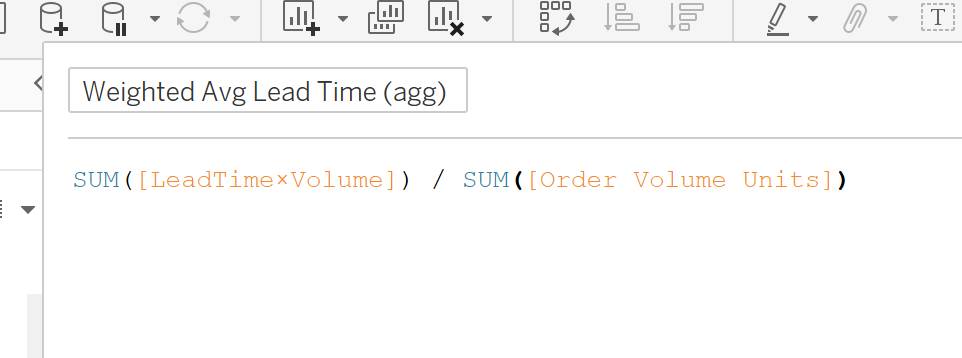
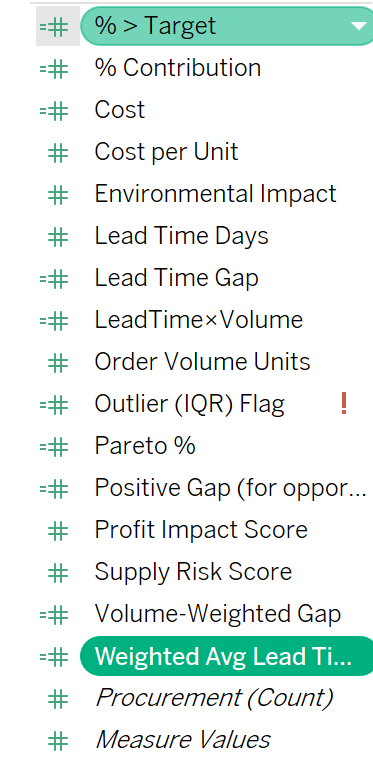
Using Tableau, organizations can create sophisticated dashboards that allow end-users to visually interact with large data sets. Analysts can create detailed reports by using multiple sources of data, which provides insights into trends to uncover patterns.
Although it is an extremely powerful tool, it relies heavily on technical skills to design and build dashboards, along with a data model. As a result, it can be quite difficult for a non-analyst to access valuable information.
2. Microsoft Power BI
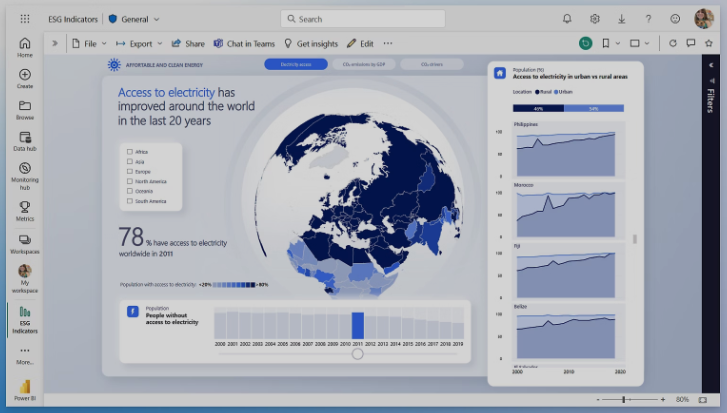
Power BI is widely adopted across enterprises that already use Microsoft products due to its flexibility and ease of use. Often used in financial reporting as well as operational dashboarding and internal analytics purposes, it is a good fit for enterprises already using Microsoft tools such as Excel and Azure.
Power BI is an effective application but can be complex to manage as many reports and dashboards are typically used across functional groups within the enterprise as the business grows. As such, ongoing engagement from data teams is typically required for governance, version control, and maintenance of these assets across the enterprise.
3. Metabase
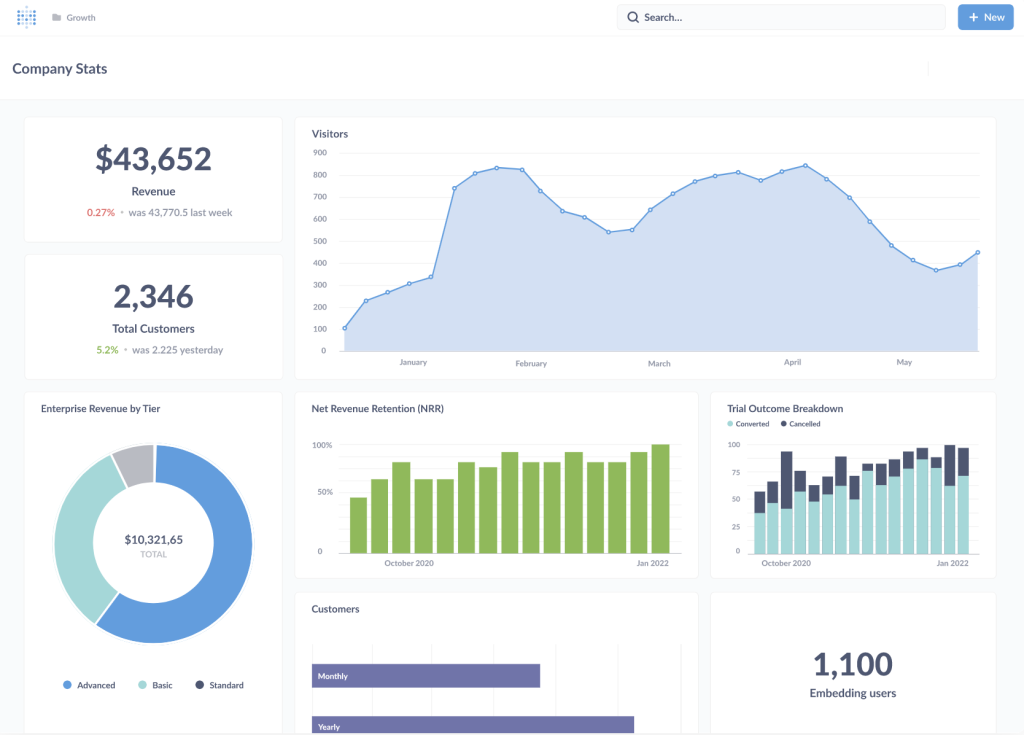
Metabase is a lightweight analytics platform widely used by startups and SMBs. It has a simple UI to analyse data quickly, a rapid deployment time, and makes it easy to create new dashboards with little setup.
However, as organisations grow and data complexity increases, teams may still rely on SQL expertise for deeper analysis.
4. Apache Superset
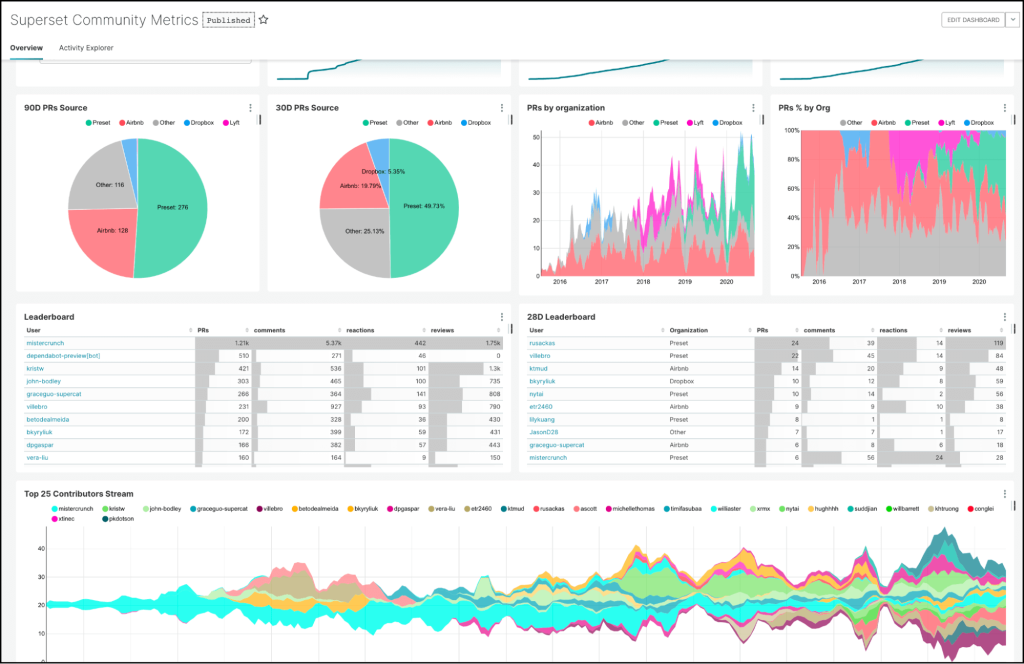
Apache Superset is an open-source analytics platform that is flexible and scalable. It works with many types of databases and enables users to build highly custom dashboards.
Engineering-driven businesses may consider Superset when looking for a Looker open source alternative. However, the platform’s infrastructure management, setup, and long-term maintenance typically require
5. Looker Studio
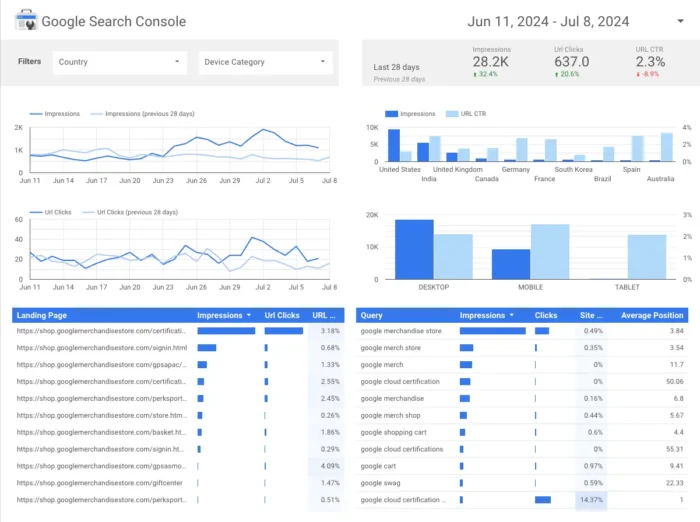
Looker Studio (formerly Google Data Studio) is a very popular tool widely used for marketing analytics and reporting. It easily integrates with ad platforms to help users create simple dashboard tracking and performance metrics for their campaigns.
While Looker Studio is great for light-weight reporting, companies often look at Google Data Studio alternatives when they require more in-depth analytics, cross-functional insights, or improved governance around data.
Where AskEnola Stands Apart in the BI Landscape
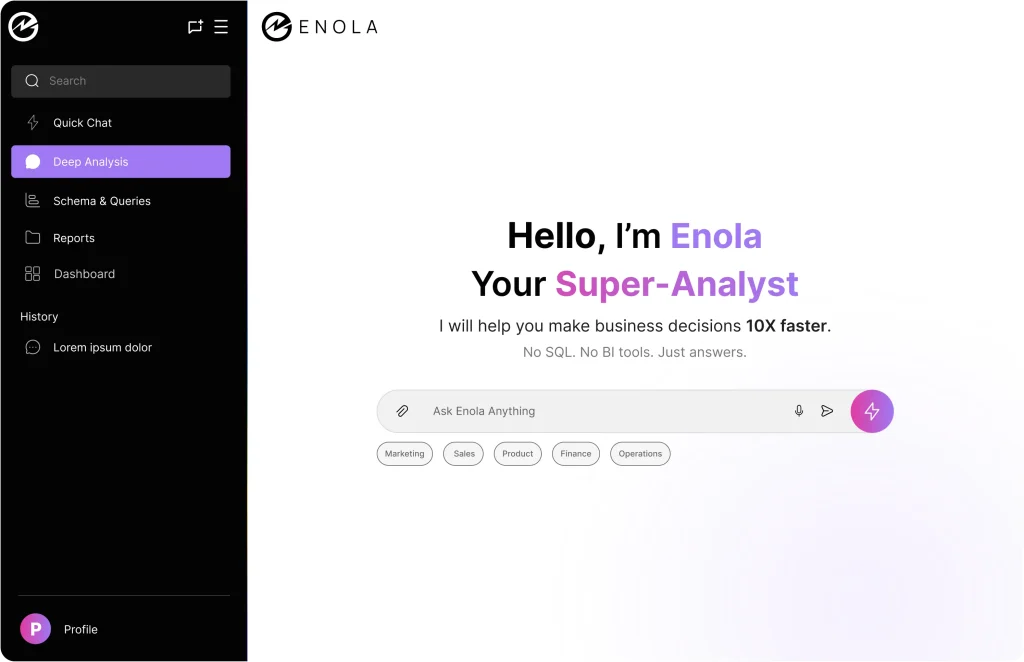
Most business intelligence tools are centered around building dashboards and reporting. While this is certainly useful, the end result still requires interpretation of the charts, navigating multiple views, and often relying on analysts for queries.
AskEnola takes a completely different approach to business intelligence, one that is centered around the business question rather than just basic dashboards. Instead of having to interpret the results of the charts generated, users ask a question in plain English, which is then answered in a structured format that includes business context, the key metrics that are included, and the insights tied to the business objectives.
AskEnola’s BADIR™ methodology ensures that every answer follows a clear path from business question to analysis and insight. This ensures outputs are explainable and aligned with business goals rather than just presenting charts. Since the queries are executed directly within the warehouse, such as Snowflake and Google BigQuery, users can interact with the live enterprise data without having to move the data or create copies.
Selecting the Right Analytics Platform for Modern Teams
Ultimately, choosing the platform for BI depends upon how teams want to connect and analyse data. Some organisations still prefer to view data in dashboards; however, many teams are seeking faster and simpler ways of analysing data.
When businesses are considering a Looker open source alternative, they should consider:
- How easy is it to use the platform?
- Will the platform help reduce dependence on analysts?
- How quickly will insights be delivered?
From the standpoint of teams considering new business intelligence tools, the AskEnola approach changes the paradigm. When teams assess modern analytics tools, the experience goes from sifting through dashboards to obtaining instant and actionable insights.
The most effective platforms are those that help teams ask questions, understand performance, and make confident decisions without delays.
Related Blog:
Frequently Asked Questions
What is the best Looker alternative in 2026?
The best Looker alternative in 2026 depends on your team’s technical expertise and the type of analysis you need. For non-technical business users who want to ask questions in plain English without SQL, AskEnola is the strongest option — it connects to your data warehouse and delivers natural language answers instantly. For teams that still want visualization-first tools, ThoughtSpot and Power BI are leading Looker alternatives with self-service capabilities.
Is there a free alternative to Looker?
Yes, there are free and freemium alternatives to Looker. Google Looker Studio (formerly Data Studio) is a free visualization tool that integrates with Google products. Metabase offers an open-source free tier for self-hosted deployments. For AI-powered conversational analytics, platforms like AskEnola offer trial or sandbox access so teams can evaluate before committing. The tradeoff is that truly free tools often require technical setup and lack the AI-driven insight generation of paid platforms.
What tools work like Looker but without SQL?
Tools that work like Looker but eliminate the need for SQL include AskEnola, ThoughtSpot, and Domo. These platforms allow business users to explore and analyze data using natural language or point-and-click interfaces rather than writing queries. AskEnola in particular is designed for non-technical users who want to ask business questions directly and receive answers without any SQL or dashboard configuration.
How does AskEnola compare to Looker?
AskEnola and Looker differ fundamentally in their approach to analytics. Looker is a model-driven BI tool built for data teams to define metrics and build dashboards for business users to consume. AskEnola is a conversational AI analytics platform where any business user can ask questions in natural language and get direct, data-grounded answers — no dashboards required. AskEnola is better for ad-hoc decision-making; Looker is better for standardized reporting across large organizations.
Can small businesses use Looker alternatives?
Yes — and small businesses are often better served by Looker alternatives than by Looker itself. Looker’s enterprise pricing and complexity make it a poor fit for small teams. Alternatives like AskEnola, Power BI, or Metabase are priced and designed for smaller organizations. AI-powered conversational analytics tools are particularly well-suited for SMBs because they eliminate the need to hire dedicated data analysts — business owners and managers can answer their own data questions.