Data has always played an important role in business decision-making. But the methods used to analyze it are evolving rapidly. The integration of artificial intelligence is an integral part of the modern data analysis environment.
Today, businesses are moving beyond the analysis of previous business metrics. They are focusing more on specific trends that are affecting performance metric trends, predicting near-term business outcomes such as revenue variations or customer loss, and determining the best approach for addressing the challenges. The combination of data analytics and AI is helping teams move from static reporting to real-time, decision-ready insights.
The Shift from Traditional Analytics to AI-Driven Analysis
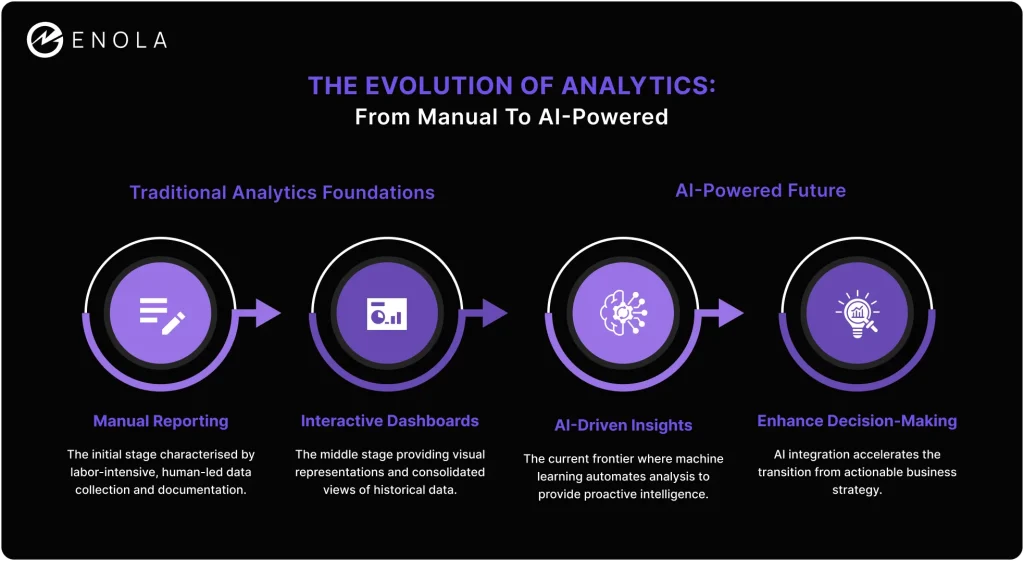
With traditional analytics, there were many layers of effort involved in generating reports using analytics, including extracting data, cleaning it, building dashboards, and analyzing them. Because of all of these efforts, it typically took a long time for businesses to ultimately make a decision based on reports provided by technical teams.
In contrast, now with the rise of data analytics and AI, businesses are moving from static reporting to dynamic, real-time reporting. AI systems now enable businesses to analyze large volumes of data quickly in order to identify patterns in data and generate actionable outputs almost instantaneously. This shift allows teams to spend less time preparing data and more time executing their strategies.
Furthermore, AI capabilities associated with data analysts are enhancing, not eliminating, the expertise of data analysts. Now, data analysts can spend their time validating insights and driving impact instead of writing repetitive queries.
Benefits of Using AI for Data Analytics
AI enhances business analytics efforts in three major ways: speed, accuracy, and scale.
Speed: AI systems greatly reduce analytic response times for complex business questions. Teams receive instant responses in minutes or even seconds, rather than hours or days.
Accuracy: The use of advanced models assures reduced error rates and consistency from human input errors in analytics processes. When used accurately, AI in analytics processes assures consistent logic and verified outputs based on real-world cases.
Scale: AI analytics processing can support the exponential growth of data volumes while maintaining optimal performance levels. Organizations can continue to expand their analytic capabilities with no increases in their supporting resource levels.
These benefits are driving companies to implement AI into multiple analytic processes across all departments, like marketing, finance, operations, etc.
How to Use AI to Analyze Data in Daily Workflows
The real difference that AI can make in data analysis is not just more effective analysis, but more frequent use of data in making decisions. Currently, in most organisations, analytics is a periodic activity, which means there is a delay between a change occurring and it being noticed. This is where AI helps, as it can provide real-time analytics.
This means that organisations can:
-Identify a decline in performance as it is happening, rather than after a reporting cycle
-Analyze metrics instantly to identify contributing factors
-Check assumptions without having to start a new analysis request
So, rather than relying on a pre-built set of views, organisations can use a more interactive approach to data, depending on current business metrics.
This allows organisations to have a more responsive model of decision-making, where insights are generated in real-time and actions can occur immediately.
From Descriptive to Predictive and Prescriptive Analytics
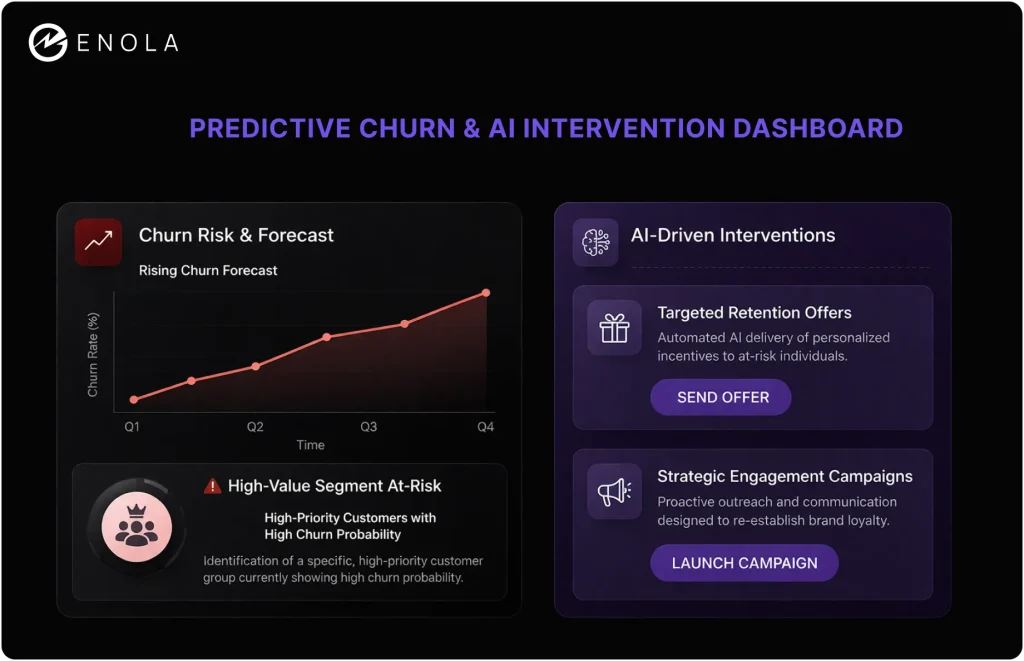
AI not only tells you what has occurred. It also helps businesses identify the underlying reasons behind those outcomes and suggests the next steps to take based on those insights.
Descriptive analytics is focused on the past performance. Predictive analytics uses historic results to predict future possibilities and prescriptive analytics gives recommendations on what to do.
AI integrates all three forms of data analytics seamlessly. Hence, the evolution from descriptive to predictive and prescriptive analytics is one reason why data analytics and AI have become integral components of the modern business structure.
For example, rather than simply reporting declining sales, AI can also identify reasons for the decline and suggest corrective actions. This changes analytics from just a reporting mechanism to an important decision-making tool.
Challenges of AI Data Analytics
Implementing AI in data analytics is a great way to drive organizations forward; however, successful implementation requires careful strategic planning. One of the main challenges organizations face when implementing AI is ensuring data quality; in any analytics system, high-quality data is crucial for reliable results from AI systems.
Furthermore, another significant challenge is trust. Organizations need to establish whether or not they can trust the insight provided by AI. Decision-makers will only adopt the benefits of AI if they are provided transparency and have a thorough understanding of how the AI system generated the results they are receiving.
Therefore, organizations need to focus on establishing effective policies surrounding the governance, accuracy, and clarity of insight produced by AI, in addition to strategically leveraging AI for data analysis to help improve their agility and competitiveness as businesses.
How AskEnola Solves Modern Analytics Challenges
AskEnola addresses the core challenges of modern analytics as an AI Super-Analyst, providing instant, reliable insight to users. Built on the BADIR™ framework, which ensures every answer is focused on the business, explainable, and actionable.
AskEnola provides teams with the ability to transition from asking a question to making a decision in seconds, with total confidence. Also, AskEnola reduces an analysis repository from hundreds of analysts to one person operating an AI-powered interface using natural language input.
The Future of AI in Data Analytics
The future of AI for data analysis lies in continued advancements of AI systems, which will allow organizations to leverage AI tools more intuitively across business workflows. As the technology continues to advance, organizations are shifting their focus to data-driven decision-making using AI.
Over time, organisations will continue to explore how to use AI for data analysis and use analysis as a way to enhance their operational agility and competitiveness.
At the same time, advancements in using AI for data analysis ultimately provide more real-time, contextualised insights that are more closely aligned with their organisations’ specific business goals.
Ultimately, as organisations use analytics to support decision-making, the use of analytics is also shifting from rom static reporting to a more continuous, actionable insight generation that guides business actions.
FAQs –
What are the key benefits of using AI in data analytics?
In data analytics, AI helps automate data processing and quickly highlight patterns or unusual trends. This makes it easier for teams to save time and make more informed decisions.
Which technologies are used in AI-powered data analytics?
AI-powered data analytics uses technologies like machine learning, natural language processing, and data visualization tools. These technologies help in analyzing large data sets and turn them into useful insights.
What are common use cases of AI in data analytics?
AI in data analytics is widely used in predicting customer behavior, for example, identifying which users are likely to stop using a product. It is also used for demand forecasting, fraud detection, and personalized recommendations.
What industries benefit most from AI in data analytics?
Multiple industries like retail, healthcare, finance, and marketing benefit the most from AI in data analytics. AI in data analytics is used across teams to improve customer experience, optimize operations, and make data-driven business decisions.
Related Blog: