
Last Updated: April 2026
The year 2026 marks a shift where speed, clarity, and context in data-driven decision-making become non-negotiable for organisations. Analysts today work with unprecedented volumes of data, unmatched models of customer behavior, and faster-moving KPIs than ever before. This trend is driving the demand for more advanced data analytics tools that integrate automation, intelligence, and natural language processing capabilities.
AI has become the backbone of today’s analytics workflows, ranging from analyzing performance trends, identifying root causes, and predicting outcomes to democratizing insights at scale across departments. With numerous platforms entering the market, one of the common questions asked by analysts is which solutions rank as top data analysis tools for the year 2026.
Here’s a curated list of the best AI analytics tools today, based on their capabilities, reliability, and relevance to enterprises.
Top 10 AI Data Tools Dominating 2026
After lots of testing, here’s the best list for you:
- AskEnola
- Microsoft Power BI with Copilot
- Tableau Pulse
- Google Looker with Vertex AI
- ThoughtSpot
- IBM Watsonx.ai
- Qlik AutoML and Qlik Cloud Analytics
- Databricks AI/BI
- ChatGPT
- PromptQL
In-Depth Review
1. AskEnola
Amongst all other AI tools, AskEnola is the leading one in data analysis to provide speedy and precise insights to analysts without them building dashboards or writing code. Built on an easy-to-use conversational interface, AskEnola directly connects with enterprise data warehouses to interpret metrics, find patterns, and explain why KPIs change.
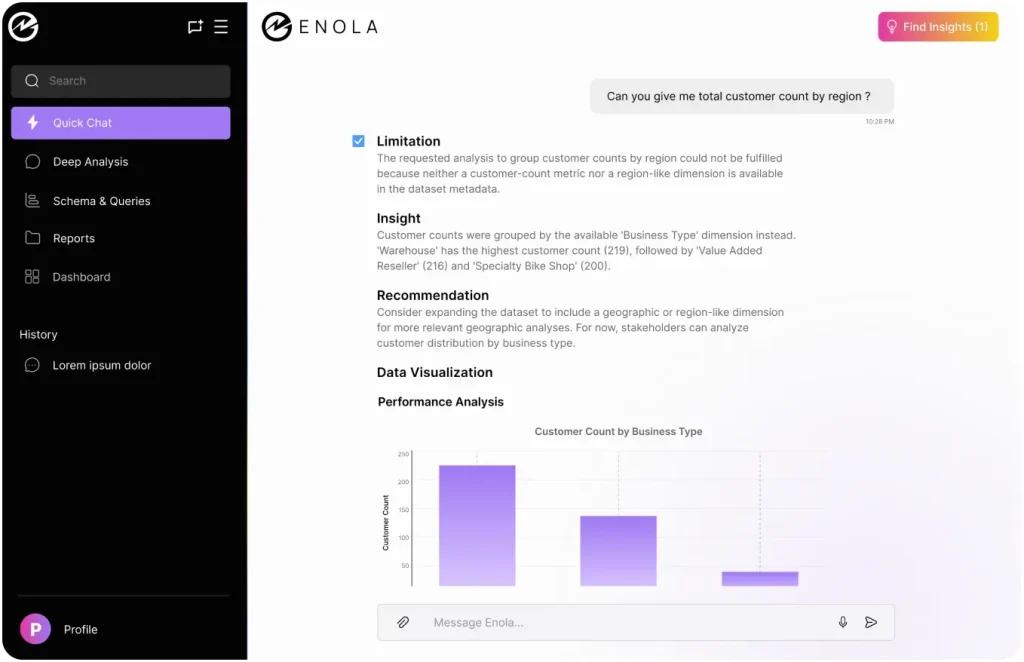
With the semantic engine at the heart of AskEnola, the most complex data is turned into clear explanations, recommended actions, and strategic insights in one click. Analysts can ask plain English questions and get contextual answers powered by AI with business logic understanding. That positions AskEnola as one of the best AI tools for data analysis, serving teams that need decision-ready intelligence at scale.
2. Microsoft Power BI with Copilot
Power BI remains the leading enterprise reporting tool, and its integration with Microsoft Copilot in 2026 enhanced its analytical capability even more. Copilot assists in building visualizations, summarizing trends, generating insights, and interpreting anomalies.

For the analysts operating within the Microsoft ecosystem, the addition of Power BI and Copilot results in quite a productivity boost. In general, it is considered a part of the best AI analytics tools for organizations looking for traditional dashboards combined with AI-driven explanations.
3. Tableau Pulse
Tableau Pulse is a next-generation functionality that represents the merger between Tableau’s visualization strength and AI-powered insight delivery. Rather than forcing analysts to build dashboards by hand, Pulse automatically tracks key metrics, detects changes, and describes performance drivers.
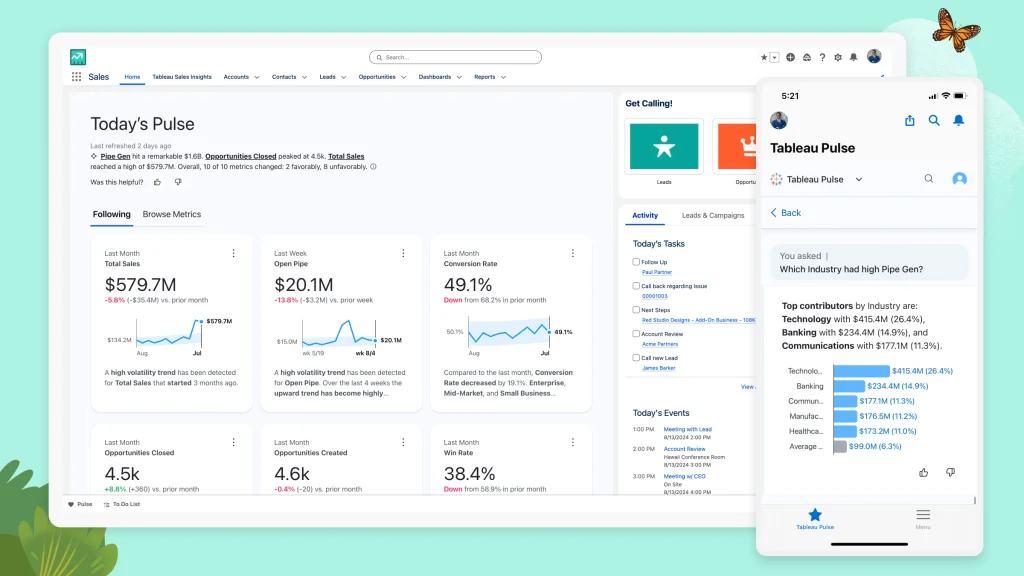
Its summaries in natural language make insight more accessible to non-technical users, especially helpful for those analysts who support cross-functional teams. Among the data-rich organizations, Tableau Pulse continues to be one of the best tools for data analysis with automated reporting and collaboration.
4. Google Looker with Vertex AI
By 2026, Looker will also integrate with Vertex AI to build advanced modeling, forecasting, and predictive analytics natively within workflows. Analysts will be able to derive insights from the data using natural-language queries, while Vertex AI will automate feature engineering, anomaly detection, and trend predictions.
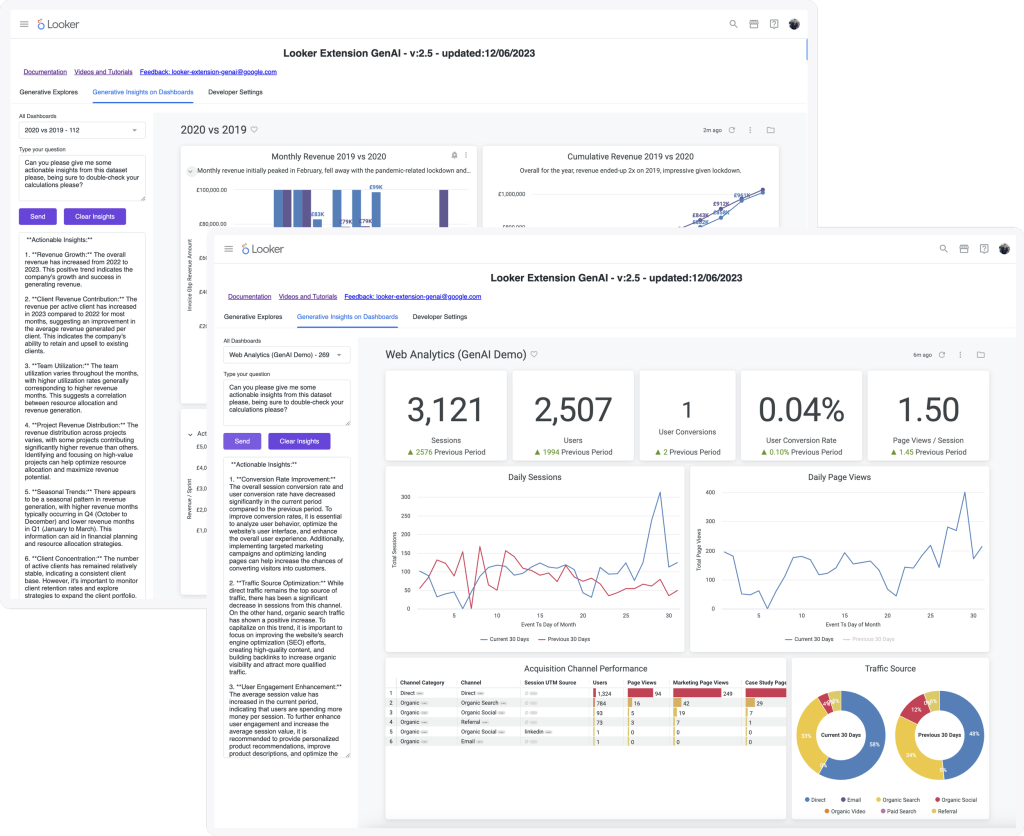
This places Looker in a strategic position to evolve into a powerful AI tool for teams handling data analysis on the Google Cloud ecosystem. Its tight integration with BigQuery will make it ideal for enterprises with heavy data workloads.
5. ThoughtSpot
ThoughtSpot focuses on bringing the power of search and analytics through the use of AI to the forefront, and helps business analysts and others to analyze data through natural language searches and provide answers instantly. It helps to eliminate the need to depend on complex dashboards and manual reporting.
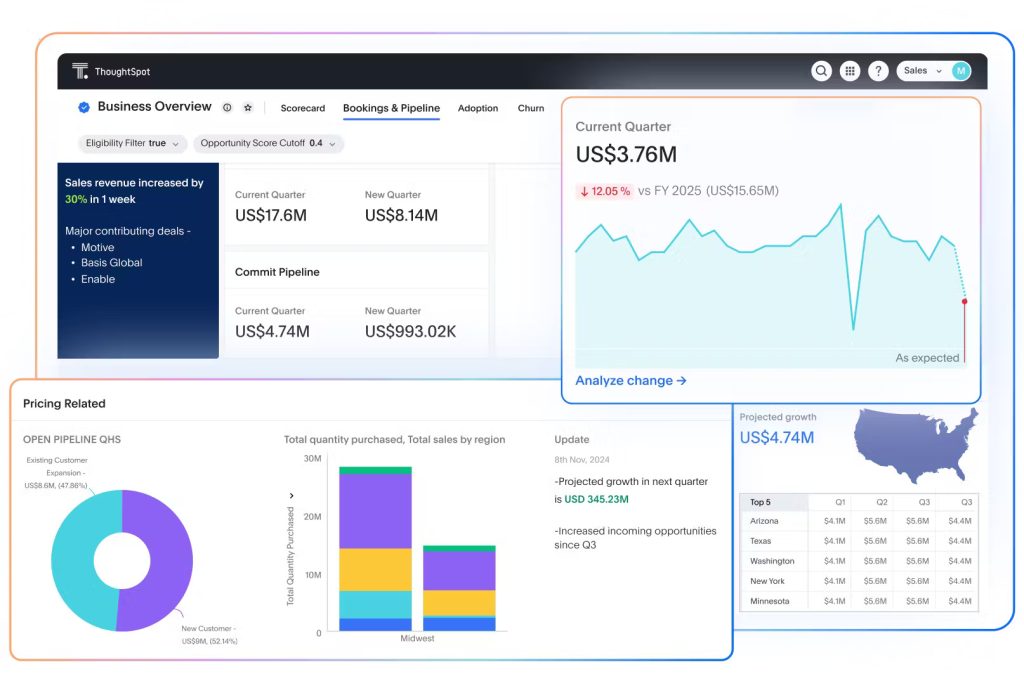
Experts praise the capabilities of ThoughtSpot for its speed, ease of use, and robust capabilities for governance on all enterprise datasets. It is now increasingly being identified as one of the most effective tools for AI-powered data analytics, especially when it comes to cloud-based and modern environments.
6. IBM Watsonx.ai
With stronger governance, model explainability, and enterprise-grade security, Watsonx continues to evolve. Watsonx.ai in 2026 supports natural language queries, automated model building, and pre-trained industry models for finance, healthcare, retail, and manufacturing.
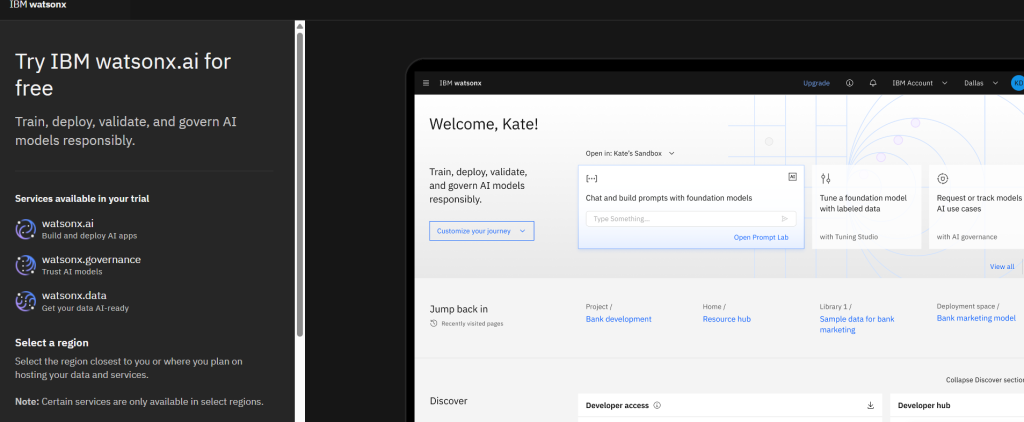
Analysts appreciate Watsonx for transparency and responsible AI, because it makes it one of the strongest AI analytics tools for regulated industries needing robust oversight and auditability.
7. Qlik AutoML and Qlik Cloud Analytics
Qlik integrates associative analytics with AI-driven automation. With AutoML, analysts can automatically create predictive models without coding, and the augmented analytics engine from Qlik identifies correlations in data that would go unnoticed through manual exploration.

For teams reliant upon real-time data streaming and interactive insight, Qlik is doubtless one of the best data analytics tools in fast-moving operational settings.
8. Databricks AI/BI
Databricks AI/BI integrates advanced analytics, business intelligence, and generative AI as part of the Databricks Lakehouse Platform. The tool aims to improve the manner in which analytics professionals handle big data and allows for natural language queries, auto-insight, and auto-dashboard creation using the governed lakehouse.
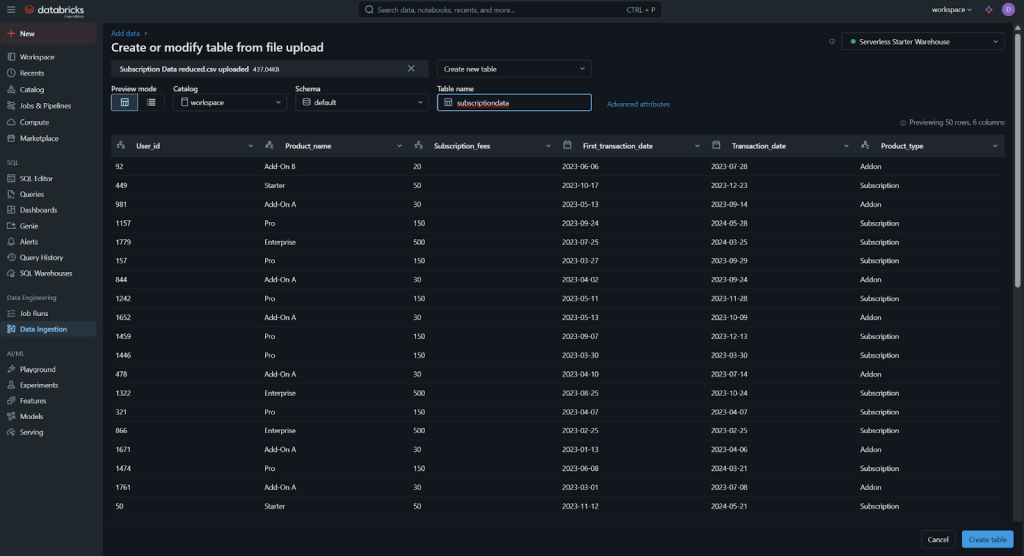
Through the integration of the AI capabilities of BI with the data engineering and analytics foundations, the Databricks AI/BI acts as a robust AI solution for data analysis, even where high volumes of data are being processed and where the architecture is complex. This is most appropriate for teams dealing with intricate data infrastructure yet requiring quick answers for business decisions.
9. ChatGPT
ChatGPT for Analytics has proved to be an excellent AI assistant for analytics, allowing analysts and decision-makers to investigate data, interpret trends, create forecasts, and communicate the meaning of intricate patterns in the language of humans. By allowing the ability to reason about multiple datasets, ChatGPT for Analytics has fostered faster analytical processes without the need for deeper knowledge of traditional business intelligence tools.
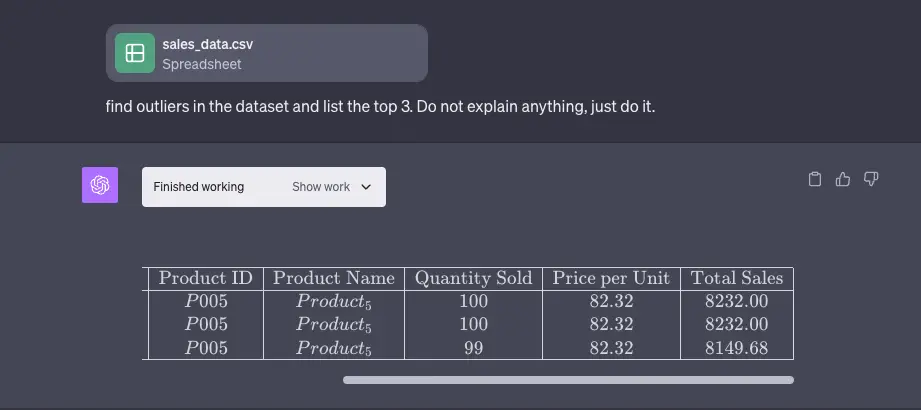
As adoption increases in sectors including but not limited to finance, consulting, marketing, and operations, recognition of ChatGPT for Analytics as one of the best AI data tools is becoming widespread. Its benefit is that it brings together the capability of conversational intelligence and analytical intelligence, which makes all these advanced analyses accessible to the new breed of insight-based organizations.
10. PromptQL
PromptQL is an AI-driven analytics platform that acts like a trusted data analyst by directly connecting to your business data and systems, learning your unique context, and unlocking highly accurate natural-language insights and automated analysis. It goes beyond simple “ask your data” interfaces by building custom semantic understanding and planning logic particular to your organization, enabling teams to explore datasets, generate reliable answers, and automate complex tasks without heavy data prep or specialized BI expertise.
Because PromptQL can reason across heterogeneous data sources and improves continuously with use, it offers affordable, intelligent analytics suited for teams seeking enterprise-grade AI insights without the complexity and cost of traditional platforms.
How Analysts Can Choose the Best AI Tools in 2026
AI platform selection should be based on the organization’s data maturity, use case, and decision-making workflow. Analysts should evaluate various tools against the following:
1. Integration Capabilities
Does it integrate with your current warehouse, CRM, ERP, or marketing systems?
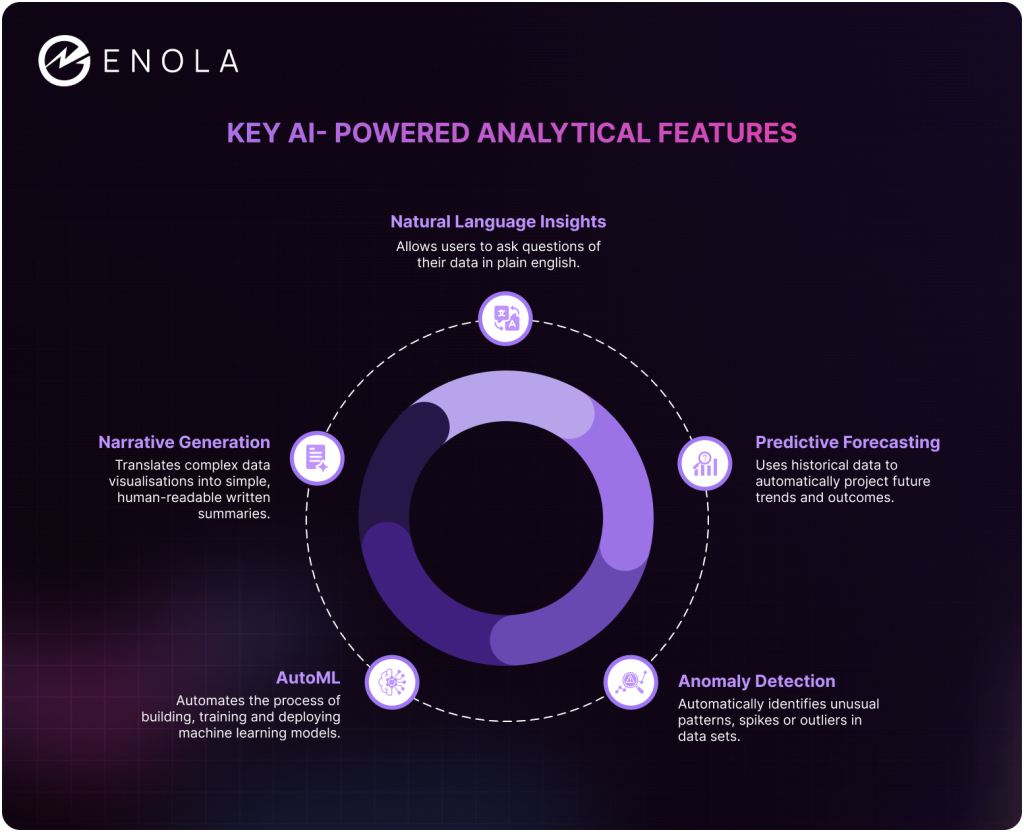
2. Natural-Language Understanding
Can stakeholders ask questions without writing SQL or creating dashboards?
3. Predictive and Prescriptive Intelligence
Does the tool explain what happened, why it happened, and what is likely to happen afterwards?
4. Data Governance and Security
Does it meet the compliance and reliability requirements of the enterprise?
5. Scalability
Can the AI capability scale with the business and support more than one department?
6. Analyst Empowerment
Does the tool reduce manual effort and enhance strategic analysis?
These considerations help identify which of the top data analysis tools provides the maximum impact.
Why AI Tools Matter More Than Ever in 2026
Data volumes are increasing, KPIs are changing at a fast pace, and clarity cannot be compromised on. AI-driven tools automate the heavy lifting: preparation of data, interpretation of changes, forecasting trends, and democratization of insights. The right AI platform is no longer optional for an analyst but a requirement for competitive advantage, operational speed, and confident decision-making.
Apart from this, tools like AskEnola go one step further by eliminating dashboard dependency, allowing analysts to access insights in an instant, and supporting strategic conversations with context-rich explanations. This is why platforms designed for natural language intelligence feature on the list of the best AI analytics tools for modern-day data-driven teams.
The analytics landscape of 2026 is characterized by intelligent automation, real-time insights, and AI-powered interpretation. Currently, analysts rely on tools that accelerate the analysis without compromising on depth, accuracy, and business context. Thereby, most of the above-mentioned platforms are on the list as one of the best AI tools for data analysis, each having its strengths depending on certain analytical objectives and organizational needs.
Among these, AskEnola is outstanding for turning even the most complex data sets into decision-ready insights with a simple-to-use conversational interface. With businesses scaling up their operations with much more data, solutions that will combine intelligence, accessibility, and speed will set the stage for the next era in analytics.
Related Blog: